Lead Generation for Colleges: Channels That Bring Qualified Enquiries
Lead generation for colleges is the work of attracting prospective students who are a genuine fit for your programmes and turning their interest into enquiries your admissions team can follow up. The goal is not the largest number of leads. It is the largest number of qualified leads, meaning students who are eligible, interested in a programme you offer and likely to apply in the coming intake.
I have worked on both sides of this: generating enquiries through offline counselling centres, school visits and education fairs, and later through search, social and landing pages for more than 200 institutions. This guide compares the main lead sources for colleges, explains how to judge lead quality and sets out a practical plan for the next intake.
What makes a lead qualified
Before choosing channels, agree with admissions what a good lead looks like. A simple definition might be:
- Interested in a programme you currently offer.
- Meets, or is likely to meet, the entry requirements.
- Planning to start in an intake you are recruiting for.
- Reachable on the contact details given, with consent to be contacted.
Write it down and use it to judge every channel. Without it, marketing will chase volume and admissions will complain about quality.
The main lead generation channels for colleges
| Channel | Strength | Watch out for |
|---|---|---|
| Search (paid and organic) | Students actively looking for a programme | Broad keywords that attract job seekers or other courses |
| Social media (paid and organic) | Reach and awareness, strong for undergraduate audiences | Instant lead forms that produce low-intent leads |
| School partnerships and visits | Trust and access to students before they decide | Hard to track unless leads are recorded on the day |
| Education fairs and events | Face-to-face conversations with families | Paper sign-up sheets that are never followed up |
| Agents and channel partners | Local reach and credibility | Uneven advice quality and commission costs |
| Referrals from students and alumni | Often the highest-quality leads | Rarely asked for systematically |
| Webinars and open days | High intent, good for conversion | Low attendance without reminders |
Getting more from digital channels
Search
Target searches that include the programme and a sign of intent: course name with “admission”, “fees”, “eligibility” or a city. Send each campaign to a dedicated programme page, not the homepage. Over time, strong programme pages also earn organic traffic; my guide to SEO for universities explains how.
Social
Use social to reach students early and retarget those who engage. If you use in-platform lead forms, add one or two qualifying questions and follow up within minutes, because these leads go cold faster than any other. My post on social media marketing for higher education covers content that turns engagement into enquiries.
Landing pages and forms
A short form on a focused page is the single biggest lever on digital lead volume and quality. Ask for name, phone or WhatsApp number, email, programme and city, plus one qualifying question. See my guide to university landing pages.

Getting more from offline channels
School partnerships
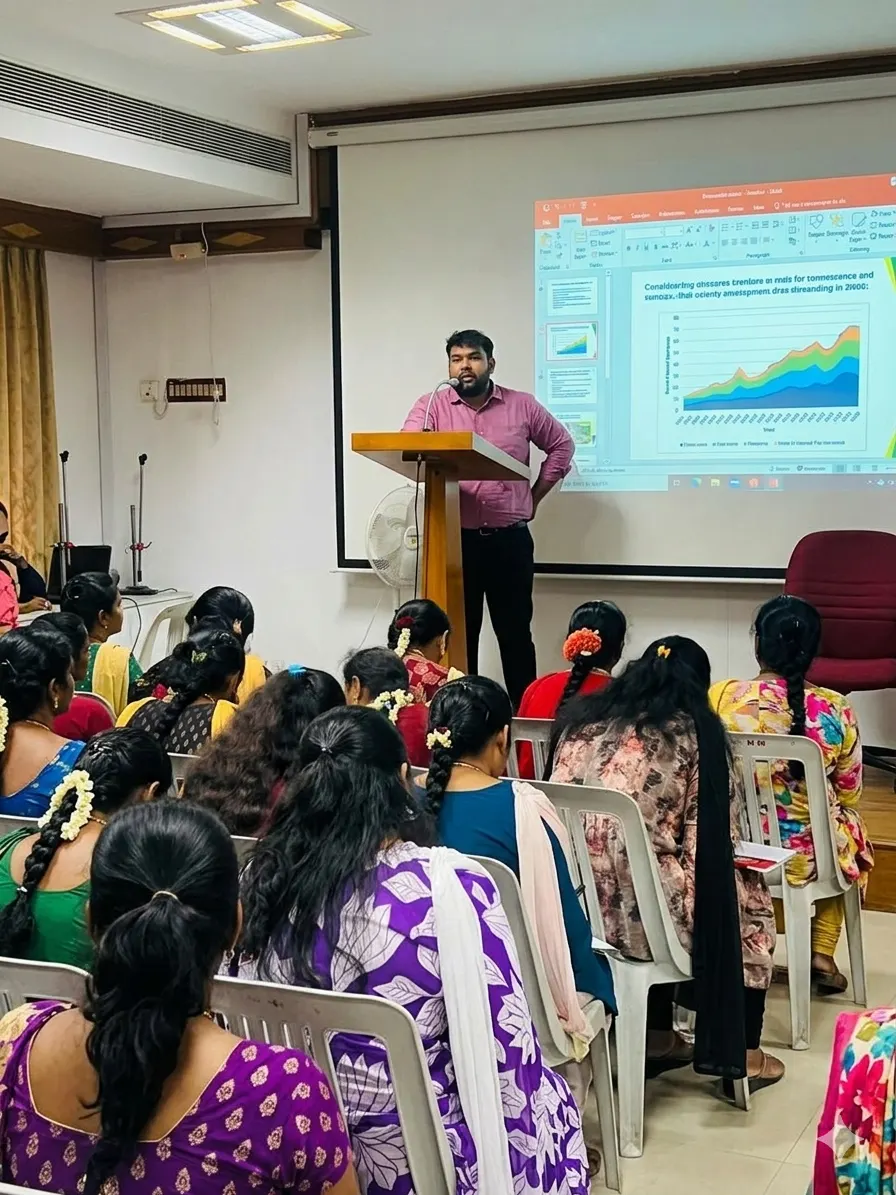
Build relationships with schools whose students fit your programmes. Offer something useful, such as career guidance sessions or subject workshops, rather than just a sales talk. Record every interested student on the day, with consent, straight into your lead system.
Education fairs
Use a short digital sign-up form or QR code instead of paper. Staff the stand with counsellors who can answer fee and eligibility questions, and follow up every lead within 24 hours.
Referrals
Ask current students and recent graduates to refer friends and siblings, and make it easy with a simple referral link or form. Thank referrers, and track referral leads separately; they often convert best.
Measuring lead generation properly
Judge each channel on the stages after the lead, not just the lead count:
- Cost per lead and cost per qualified lead.
- Contact rate: how many leads counsellors actually reached.
- Lead-to-application rate by source.
- Cost per application and cost per enrolled student.
Use UTM parameters on all digital links and record a source for every offline lead. My post on higher education marketing metrics explains the full set.
A simple lead generation plan for the next intake
- Define a qualified lead with admissions.
- Pick your priority programmes and the students each one is for.
- Fix the pages and forms those programmes depend on.
- Choose three or four channels that fit those students, combining digital and offline.
- Set a response-time target and make sure every lead lands in one system.
- Review weekly during the campaign, and move budget towards sources that produce applications.
From the field
A newly accredited university came to me with no awareness ahead of its first intake. We ran a multi-channel launch across search, social and offline outreach, with a funnel behind it to handle the demand, and it generated more than 15,000 student enquiries in the first intake. The volume was only useful because the follow-up was planned before the first ad went live. Lead generation and lead handling have to be designed together.
Frequently asked questions
What is the best lead generation channel for colleges?
There is no single best channel. Search usually brings the highest-intent digital leads, while referrals, school partnerships and events often bring the most trusted offline leads. Most colleges do best with a mix.
How can colleges improve lead quality?
Agree a definition of a qualified lead, target searches with clear intent, add a qualifying question to forms, and judge channels by applications rather than lead count.
Are cheap leads bad for colleges?
Not always, but cheap leads that never apply cost your team time. Compare channels on cost per application and cost per enrolled student.
How quickly should colleges follow up new leads?
Send an automatic acknowledgement within minutes and aim for a counsellor to make contact within a few working hours.
Should colleges buy student lead lists?
No. Bought lists usually lack valid consent, perform poorly and can breach data protection law, such as India’s DPDP Act, 2023, published on the MeitY website.
Conclusion
Lead generation for colleges works when it is built around qualified leads, not volume. Define what a good lead is, choose a mix of digital and offline channels that fit your students, send traffic to focused pages, record every source, follow up fast and judge each channel on applications. If you want help, I work with institutions as a college marketing consultant.
Want more qualified enquiries?
Tell me your programmes and current lead sources, and on a free 30-minute call I will show you where to focus next intake.